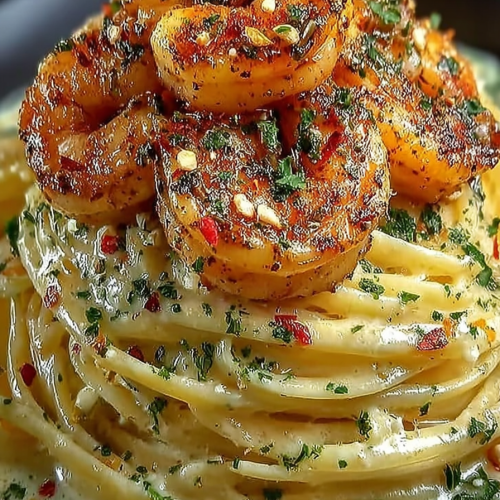
Creamy Shrimp Linguine: A Restaurant-Quality Meal at Home
A rich, silky pasta dish featuring tender shrimp tossed in a lemony Parmesan cream sauce—easy enough for weeknights, elegant enough for guests.
Ingredients
- 1 lb linguine pasta
- 1 lb large shrimp peeled and deveined
- 3 cloves garlic minced
- 1 cup heavy cream
- 1/2 cup grated Parmesan cheese
- 2 tablespoons butter
- 1 tablespoon olive oil
- 1/4 cup fresh parsley chopped
- 1 lemon juiced and zested
- Salt and black pepper to taste
- 1/4 teaspoon red pepper flakes optional
Instructions
- Prepare the Pasta: Bring a large pot of salted water to a boil and cook the linguine according to package instructions until al dente. Reserve 1/2 cup of pasta water, then drain.
- Cook the Shrimp: Heat olive oil and butter in a large skillet over medium heat. Add shrimp, season with salt and pepper, and cook for 2–3 minutes per side until opaque. Remove and set aside.
- Sauté the Aromatics: In the same skillet, add garlic and red pepper flakes. Sauté briefly until fragrant.
- Prepare the Sauce: Pour in heavy cream and bring to a gentle simmer. Stir in Parmesan cheese until melted and smooth.
- Combine and Finish: Add lemon juice and zest, return shrimp to the skillet, and toss to coat. Add linguine and reserved pasta water as needed to reach desired consistency. Stir in parsley and serve immediately.
Notes
This creamy shrimp linguine is wonderfully straightforward, but a few thoughtful details can make the difference between a good pasta dish and one that feels truly restaurant-quality. These notes will help you get the best possible result every single time.
- Don’t overcook the shrimp. Shrimp cook incredibly fast, and once they pass that sweet spot, they turn rubbery almost instantly. As soon as they’re pink, opaque, and gently curled, pull them from the pan. They’ll finish warming through later when returned to the sauce, which keeps them juicy and tender.
- Salt your pasta water generously. This is your only real chance to season the pasta itself. The water should taste like the sea, which ensures the linguine has flavor from the inside out and doesn’t rely solely on the sauce for seasoning.
- Reserve the pasta water—seriously. That starchy water is liquid gold. A splash or two helps loosen the sauce, improves texture, and creates that silky, glossy finish you usually only see in restaurants. Add it gradually so the sauce stays creamy, not watery.
- Use freshly grated Parmesan. Pre-grated cheese often contains anti-caking agents that prevent it from melting smoothly, which can leave the sauce grainy. Freshly grated Parmesan melts seamlessly into the cream, giving you a smooth, luxurious sauce with better flavor.
- Keep the heat gentle once the cream is added. High heat can cause cream-based sauces to separate or break. A gentle simmer is all you need to thicken the sauce while keeping it velvety and cohesive.
- Add lemon gradually and taste as you go. Lemon is essential here—it cuts through the richness and brightens everything—but too much can overpower the sauce. Start with a little juice and zest, then adjust until the balance feels just right.
- Serve immediately for best texture. Creamy shrimp linguine is at its peak right off the stove, when the sauce is silky and the pasta perfectly coated. Letting it sit too long can cause the sauce to thicken more than intended.